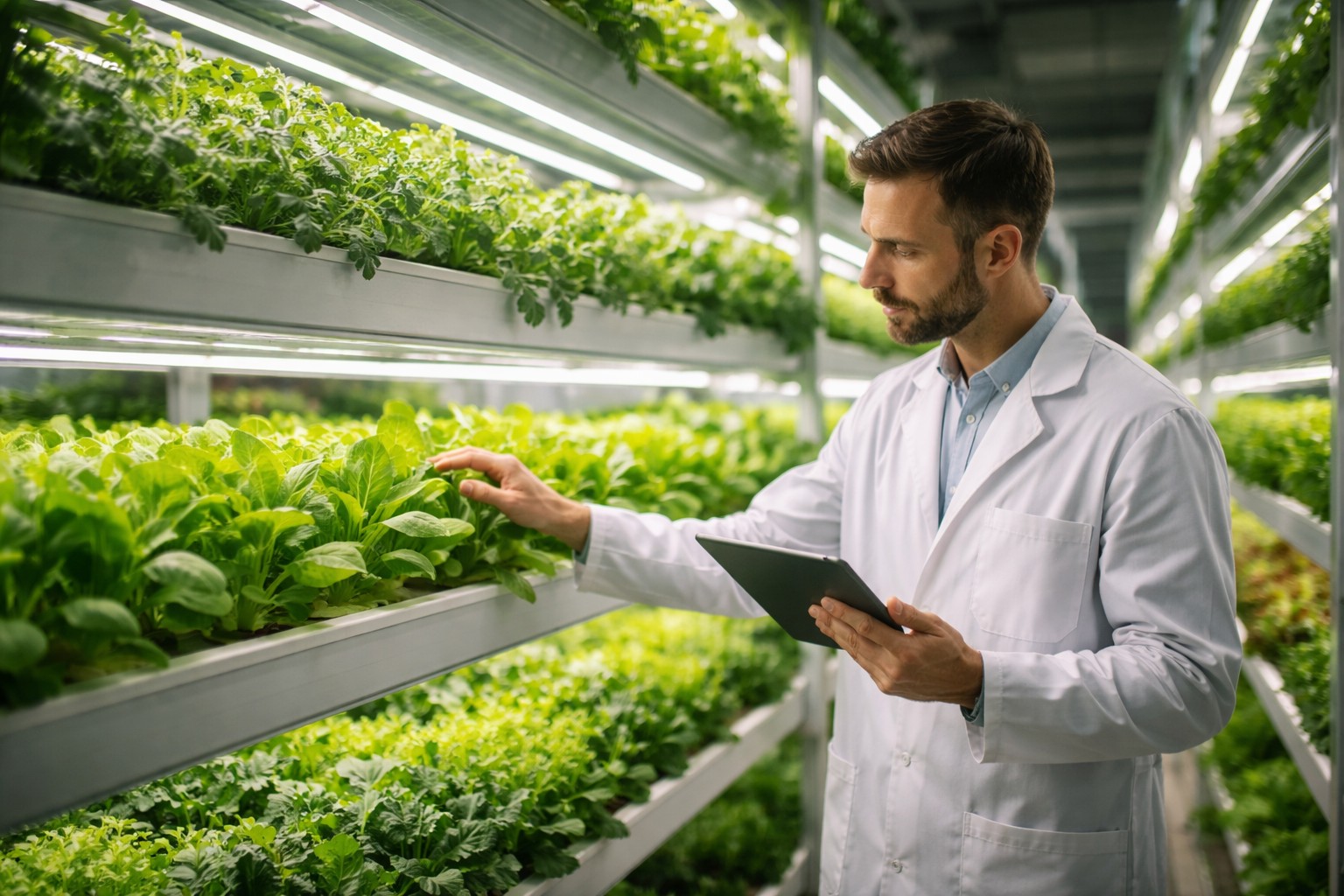
Vertical farming is gaining momentum worldwide as advances in lighting technology, hydroponic systems, and automation accelerate its shift from niche innovation to a viable model for large-scale food production. Recent market analyses point to rapid growth in the sector, reflecting rising concern over food security, climate instability, and the limitations of traditional agriculture in an increasingly urbanized world.
By growing crops in stacked indoor systems under controlled conditions, vertical farming allows producers to generate high yields while using significantly less land and water than conventional farming. The approach has proven particularly effective for leafy greens and specialty crops, and its appeal has expanded as consumers seek fresh, locally grown produce that is less dependent on pesticides and long-distance transportation.
Industry estimates place the global vertical farming market in the multi-billion-dollar range in the mid-2020s, with strong growth expected over the coming years. Analysts attribute this momentum to improvements in energy-efficient LED lighting, which have reduced operating costs while enabling precise control over plant growth cycles. At the same time, the integration of sensors, data analytics, and automation has made indoor farming more predictable and scalable, improving productivity and reducing waste.
These technological advances are unfolding against a backdrop of mounting environmental pressures. Climate change, extreme weather, soil degradation, and water scarcity are increasingly disrupting outdoor agriculture, while expanding urban populations are placing additional strain on food supply chains. Vertical farming addresses many of these challenges by operating independently of weather conditions and using a fraction of the water required by field-based production.
North America has emerged as a leading region for investment in vertical farming, supported by strong demand for locally produced food and well-developed agri-technology ecosystems. Interest is also growing rapidly in regions where arable land is limited or environmental conditions are particularly challenging, reinforcing the sector’s global relevance. For cold-climate regions such as the Canadian Prairies, the ability to grow food indoors year-round is increasingly viewed as a strategic advantage.
At Regina Hydroponics, the global expansion of vertical farming aligns with a longer-term vision for sustainable, resource-efficient agriculture in Saskatchewan. While the organization remains in its early stages, it is closely following developments in controlled-environment farming to understand how hydroponic and vertical systems could support future food resilience on the Prairies. International trends demonstrate how technology-driven agriculture can complement traditional farming by reducing environmental pressure and increasing local production capacity.
As investment and innovation continue to shape the sector, vertical farming is increasingly seen not as a replacement for conventional agriculture, but as a complementary approach that strengthens food systems in the face of uncertainty. Its growth signals a broader shift in how food may be produced in the decades ahead, with controlled-environment agriculture playing a growing role in meeting global and local needs.