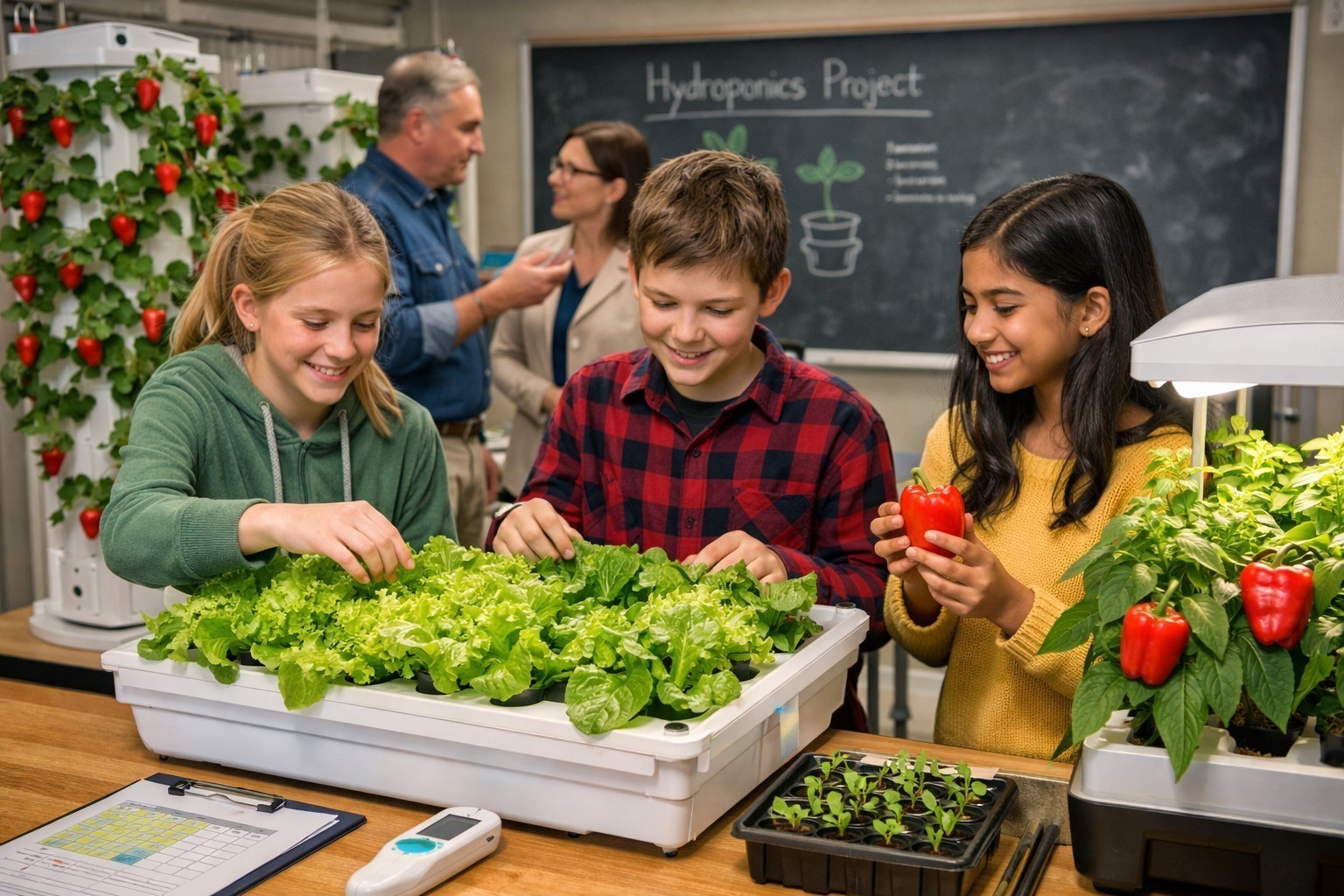
More than 50 schools across North Dakota are set to receive indoor hydroponic garden systems as part of a Farm to School initiative aimed at strengthening food literacy and hands-on agricultural education.
State officials say the program will reach nearly 5,000 kindergarten-to-Grade 12 students, giving them direct experience in growing food indoors using water-based systems rather than soil. The gardens are designed to support classroom learning in plant science, nutrition, and local food systems while exposing students to sustainable growing practices.
The initiative is funded through the U.S. Department of Agriculture’s Patrick Leahy Farm to School Grant Program, which supports agricultural education, edible school gardens, and local food procurement in schools and early childhood settings.
Education and agriculture advocates say the systems are built for long-term use, allowing schools to integrate hydroponics into lessons and meal programs well beyond the initial grant period.
While the program is based in North Dakota, similar approaches are gaining attention in Canadian Prairie provinces, where long winters and limited growing seasons make indoor agriculture an increasingly attractive educational tool. Hydroponic gardens offer schools a way to grow fresh produce year-round while helping students understand food systems, sustainability, and climate resilience.
As interest in controlled-environment agriculture continues to grow, school-based hydroponics programs are emerging as a practical entry point—linking education, nutrition, and local innovation across the northern Great Plains.
For Regina Hydroponics, initiatives like this underscore a broader vision for sustainable farming on the Prairies. While the organization is still in the early stages of development, its focus is on exploring how small-scale, water-efficient hydroponic systems can contribute to future food education, local production, and climate-resilient agriculture in Saskatchewan.
Programs such as the North Dakota school initiative highlight what is possible when controlled-environment farming is integrated into learning and community spaces, an approach Regina Hydroponics aims to support over time as part of a long-term commitment to sustainable, locally grounded food systems.