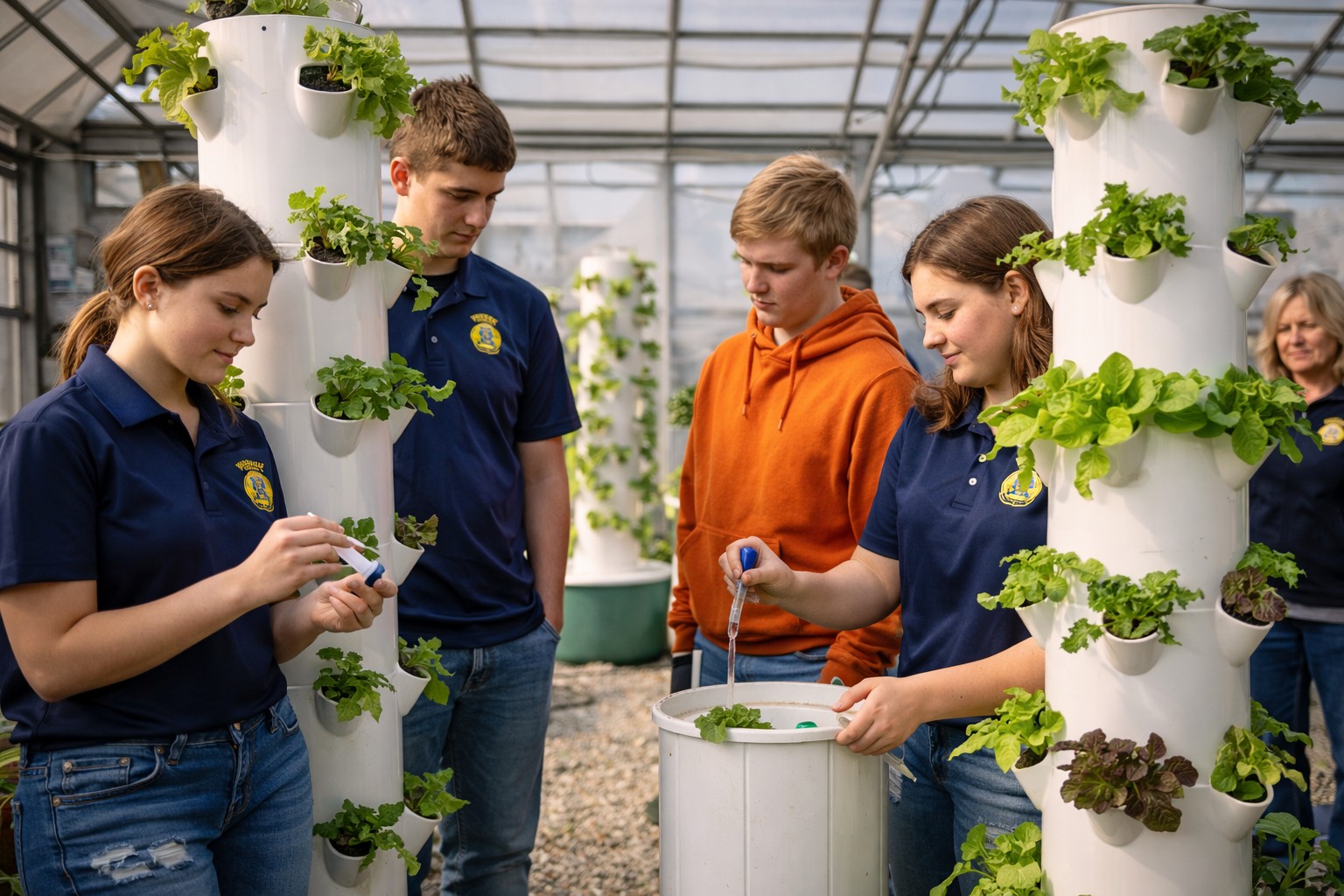
A Michigan high school agriculture program is expanding its hands-on learning opportunities after receiving funding to introduce vertical hydroponic growing systems, highlighting a broader shift toward experiential, technology-driven agricultural education.
The Ubly FFA chapter was among a small group of schools selected to receive a Glassbrook grant, which supports practical instruction in agriculture, food systems, and natural resources. The funding will be used to purchase Tower Gardens—vertical hydroponic systems that allow students to grow plants indoors using water-based nutrient solutions rather than soil.
Educators involved in the program say the systems will give students direct exposure to plant biology, water chemistry, and controlled-environment growing techniques. As part of the initiative, students enrolled in botany and agriscience courses will learn how to manage nutrient balance, monitor plant development, and maintain hydroponic systems. The project also includes a pathway for students to earn certification in hydroponic production.
The Glassbrook grants, awarded through the Michigan FFA Foundation, are designed to strengthen applied learning by providing schools with the tools and resources needed to bring agricultural curriculum into real-world settings. This year’s funding round supported 11 schools across the state and is expected to reach more than 2,600 students from kindergarten through Grade 12.
In Ubly, the program will extend beyond the high school level. Plans are in place to partner with local elementary classrooms, where the Tower Gardens will be temporarily installed to support plant science lessons. High school students and their agriscience instructor will oversee system maintenance and water quality, offering mentorship while ensuring the success of the younger students’ growing projects.
Program organizers say this cross-grade collaboration reflects a growing emphasis on learning by doing—an approach that encourages students to engage directly with agricultural systems rather than studying them only in theory. Grant selection committees evaluated proposals based on educational impact, innovation, and long-term planning to ensure the funded projects could be sustained over time.
Glassbrook funding may be used for a range of educational purposes, including equipment purchases, curriculum development, field experiences, and improvements to school laboratories and greenhouses. Schools receiving grants are expected to complete their projects within a three-year period.
While the initiative is based in the United States, similar models are increasingly relevant for Canadian schools, particularly in regions where climate and seasonality limit outdoor growing. For organizations such as Regina Hydroponics, programs like this illustrate how hydroponic and vertical farming systems can play a meaningful role in agricultural education, helping students build practical skills while exploring more sustainable and climate-resilient approaches to food production.